Restoring reefs. Feeding communities. Protecting ecosystems.
We work with local communities in the Mentawai Islands to bring life back to damaged reefs and fish back to village tables

Welcome to Reef Conservation, where we specialize in coral conservation through the construction of artificial reefs. Our services include wave and current defense systems, sand stabilization, and reef restoration to support healthy marine ecosystems. We begin each project by conducting aerial and underwater inspections at the location. After assessing the area, we provide tailored solutions and help kickstart the project, ensuring we hire only local workers to promote sustainable fishing practices in the community.

Reef Conservation is dedicated to protecting and restoring marine ecosystems. Our mission is to educate local communities about the importance of reefs and to provide sustainable solutions for reef conservation.
CORAL is a project focused on coral conservation, aiming to save reefs while also enhancing biodiversity and providing food fish for local villages. The construction of artificial reefs brings an abundance of life, creating zones that teem with fish that would typically lack the protection of natural reefs. As a result, these fish are present in much greater numbers. These artificial reefs not only supply food but also play a crucial role in protecting islands from wave action, strong currents, and erosion. In fact, artificial reefs are significantly more effective than solid walls, which can create strong backwash that eventually leads to erosion and collapse. A combination of reef restoration and tapered walls proves to be much more efficient in reducing wave power. Additionally, the ocean contributes more oxygen than rainforests, highlighting the importance of protecting our marine ecosystems if we want to sustain coral restoration efforts. It is essential to stop the removal of forests and vegetation from ocean-facing hills, as this leads to topsoil and sands quickly eroding into local reefs. This constant sedimentation creates cloudy water, diminishing sunlight and hindering coral growth while also smothering them and causing added stress. Sustainable fishing practices are vital to ensure the health of these marine ecosystems and the resilience of our coral reefs.

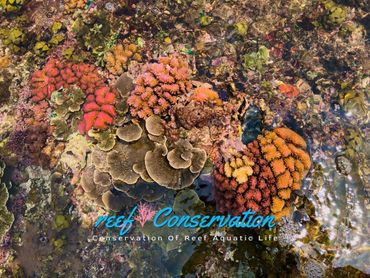
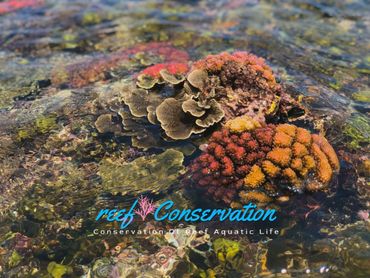
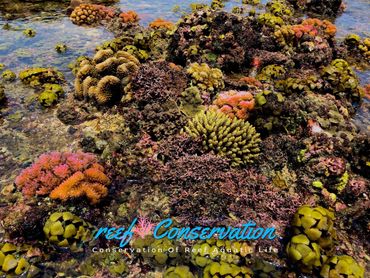
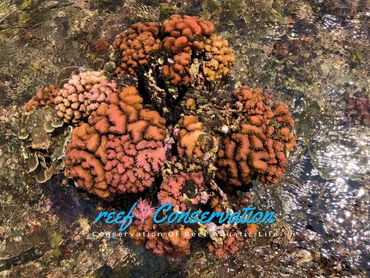
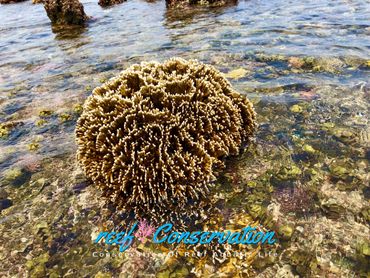
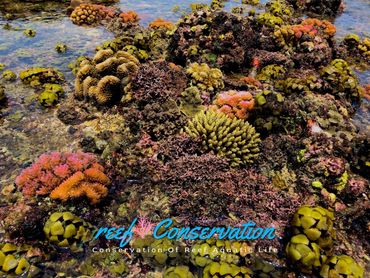

At reef Conservation, we believe that coral is the main building block for marine life. The habitat brings fish and more life. The healthier the reef faster it will grow. This brings more food for locals. And more protection for islands.
We take a personalized approach to every project, taking the time to understand our clients' vision and needs. Our goal is to create a way forward and help protect reefs, this allows us to educate a lot more people on the need to save the reefs.
Our team comprises experienced and skilled indoor coral farming and water parameter analysis who spent their lives in the ocean surfing and snorkelling. We specialize in various styles of artificial reefs, including island protection, vegetation rehabilitation. We also offer personalised services for clients who want to create a personal reef in front of their resort for guests, we believe it brings so much life. So we are happy to help build reefs.
Our team will be people who have the same mindset and passion for restoring reefs as we do. And we plan to hire all local people for the projects we take on. We believe that education and hands on experience can create passion for local people to be involved, and we think helping local economy and communities is key through funding and education. We also would love to help with other similar projects if we can and support the good programs we see. We believe the more people doing this, the better for the mission. We want to share all our experience and techniques so others can use them. And we would like to share our water testing data so any similar organisation can use it. And hopefully help create a better understanding of different environments.
For the past 28 years, I was heavily involved in the salt water aquarium hobby.
From a few tanks in my spare room where I discovered that we could grow corals, to a Wharehouse full of frag tanks, where I propagate and cut up living corals to produce more colonies. what started off as a hobby has become a passion and my business. but now I want to grow coral to be able to restore reefs around the world.
And the most sustainable way to do it, is in the ocean. using mother natures lights the sun, and the aquarium is the ocean.
I want to give back to the ocean so I'm going to dedicate my life to helping save the Coral Reefs.



#ConservationOfReefAquaticLife

CORAL is a project focused on coral conservation, aiming to save reefs while also enhancing biodiversity and providing food fish for local villages. The construction of artificial reefs brings an abundance of life, creating zones that teem with fish that would typically lack the protection of natural reefs. As a result, these fish are present in much greater numbers. These artificial reefs not only supply food but also play a crucial role in protecting islands from wave action, strong currents, and erosion. In fact, artificial reefs are significantly more effective than solid walls, which can create strong backwash that eventually leads to erosion and collapse. A combination of reef restoration and tapered walls proves to be much more efficient in reducing wave power. Additionally, the ocean contributes more oxygen than rainforests, highlighting the importance of protecting our marine ecosystems if we want to sustain coral restoration efforts. It is essential to stop the removal of forests and vegetation from ocean-facing hills, as this leads to topsoil and sands quickly eroding into local reefs. This constant sedimentation creates cloudy water, diminishing sunlight and hindering coral growth while also smothering them and causing added stress. Sustainable fishing practices are vital to ensure the health of these marine ecosystems and the resilience of our coral reefs.
Join our community and follow our instagram , Facebook, you tube and Tictok stay informed about our work, there are many ways to get involved with reef Conservation.
CORAL is a project focused on coral conservation, aiming to save reefs while also enhancing biodiversity and providing food fish for local villages. The construction of artificial reefs brings an abundance of life, creating zones that teem with fish that would typically lack the protection of natural reefs. As a result, these fish are present in much greater numbers. These artificial reefs not only supply food but also play a crucial role in protecting islands from wave action, strong currents, and erosion. In fact, artificial reefs are significantly more effective than solid walls, which can create strong backwash that eventually leads to erosion and collapse. A combination of reef restoration and tapered walls proves to be much more efficient in reducing wave power. Additionally, the ocean contributes more oxygen than rainforests, highlighting the importance of protecting our marine ecosystems if we want to sustain coral restoration efforts. It is essential to stop the removal of forests and vegetation from ocean-facing hills, as this leads to topsoil and sands quickly eroding into local reefs. This constant sedimentation creates cloudy water, diminishing sunlight and hindering coral growth while also smothering them and causing added stress. Sustainable fishing practices are vital to ensure the health of these marine ecosystems and the resilience of our coral reefs.
Togat Nusa Retreat in Mentawai Islands, Sumatra

Friendly locals keeping an eye on us
the rays are important for reef health.
doing what they do best .... growing .
